To view these projects as they were intended to be seen, please visit this portfolio on a desktop screen. A tailored mobile experience is currently in development.
Note
I apologize for any inconvenience caused.
Lumina
Mental Health App
Individual Re-design of UI
Software used: Figma, FigJam, Miro, Google Analytics, Google Forms, ChatGPT
TLDR
Mental health records in Ireland are a labyrinth to navigate, plagued with long waiting times, redacted text and clinical terminology un-understandable to its recipient.
Date
May-September 2025
Role
UX Researcher
UI Designer
Group Members: 5
The Problem
Ireland is the only EU country without digital health records. Patients must mail physical requests or navigate GDPR emails with no tracking or transparency. These are often heavily redacted and filled with dense clinical language that alienates and confuses patients.
Data access is a lived experience, yet current approaches treat records as cold, static data. Closing this gap demands a human-centered architecture that transforms record access into a supportive system designed to protect trust, autonomy, and holistic wellbeing.
Goals To be Achieved
WCAG Accessibility
Trauma-Informed Principles
GDPR/FOI Compliance

Research
We used two research methods, surveys and interviews, to gauge the perspectives of both clinicians and patients.
Sample Sizes: 19 Survey Respondents 2 Interviews
Surveys
This survey maps patient experiences, immediate challenges, and expectations for future care."
Demographic
User Base: Irish citizens (18–65) with recent history accessing mental health records.
Interviews
Interviews were conducted to gauge clinicians’ perspectives, identify the challenges faced by both patients and clinicians, and explore ways to create a more transparent, patient-friendly, and ethical healthcare system in the future.
Interviewee Background
The interviews consisted of two psychiatry experts with published research papers, along with one product designer and mental health advocate.
Note:
The participants agreed to share their data publicly, and their identifying information was redacted in accordance with GDPR. All research data was stored on encrypted servers.
Themes Uncovered
1.
Patients face structural, legal, and procedural barriers.
Even with GDPR and Freedom of Information protections, accessing mental health records remains unclear, fragmented, and inconsistent across institutions. Patients are often left to navigate complex systems alone.
“Many patients simply don’t know they can access their records. Even when it’s legally possible, both patients and clinicians might be unclear about what parts must be made available.” (Participant A)
2.
Navigating a health crisis shouldn't require decoding medical jargon.
Impersonal clinical terminology and an impersonal tone can feel alienating or retraumatising. Emotional preparation before access is essential.
“It’s important to go through the journey first. You need to be mentally ready to read about tough times.” (Participant C)
3.
Designing for access: Balancing seamless usability with psychological safety.
They seek plain-language summaries, contextual explanations, mood check-ins, and compassionate tools to create a more humane experience.
“It should be digital, with a patient portal. Accessible, simple for all ages, with upfront emotional support and reflection tips.” (Participant C)
4.
The Clinician’s Dilemma: Transparency vs. Therapeutic Safety
Many fear that open records could trigger emotional distress, cause misinterpretation, or damage patient trust.
“They might no longer tell you things because they know it’ll go into the system.” (Participant B)
5.
Enhancing clarity with AI while anchoring in human sensitivity.
AI is valued for improving readability and translating notes, yet emotional tone, context, and ethical judgment remain deeply human responsibilities.
"I’m happy to use technology to clean up messy medical notes, but a computer shouldn't have the final say on how my personal story is framed. There has to be a human gatekeeper."(Participant C)
Design Process Based on Human-Centered Design
The design process combined prototyping, speculative concepts, and iterative evaluation to explore safer, more transparent, and emotionally supportive mental healthcare experiences.
1. Design Requirements
Theme

Aurora borealis
The hypnotic, rippling waves of light help lower heart rates and reduce stress, with a UC study showing these awe experiences drop cortisol by 25% and release mood-boosting oxytocin.

Blue Led Lights
A suicide prevention measure from Japan involving blue light-emitting diode (LED) lamps at railway platforms has led to an 84% reduction in suicides over a ten-year period (2000-2010)
2. Product Design
Concepts
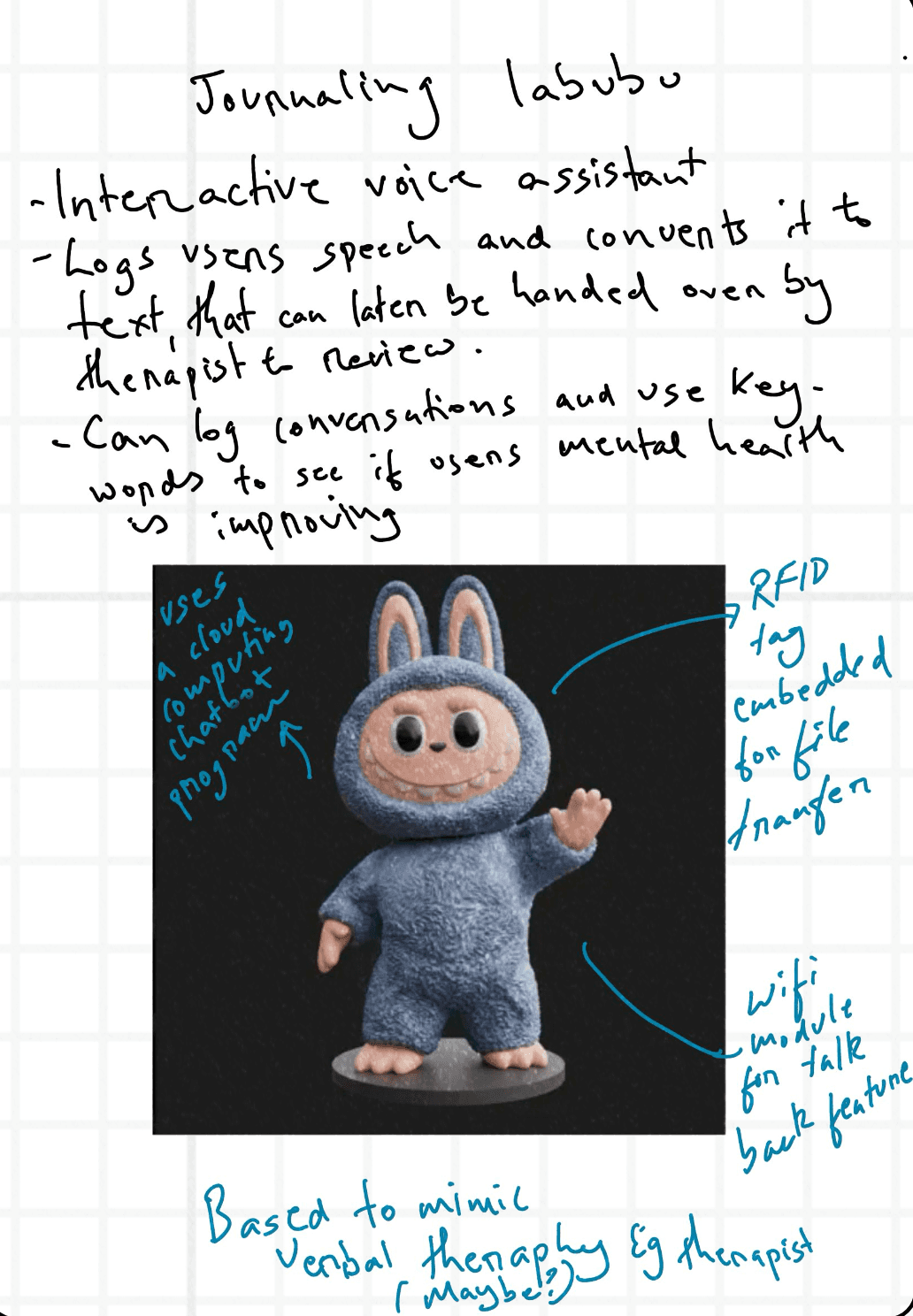
Voice Assistant Labubu
Voice assistant for therapeutic venting. Transcribes speech for therapist review. Tracks emotional trends and detects declining mental health with ML speech analysis. Prompts support when needed. RFID patient ID. Secure Wi-Fi sync.

CortiSpike
An HRV-based wearable that detects cortisol spikes to provide real-time anxiety relief. It grounds users through discreet haptics and soothing media, while logging stress triggers and alerting therapists to acute episodes for personalized care.
3. Evaluation & Testing
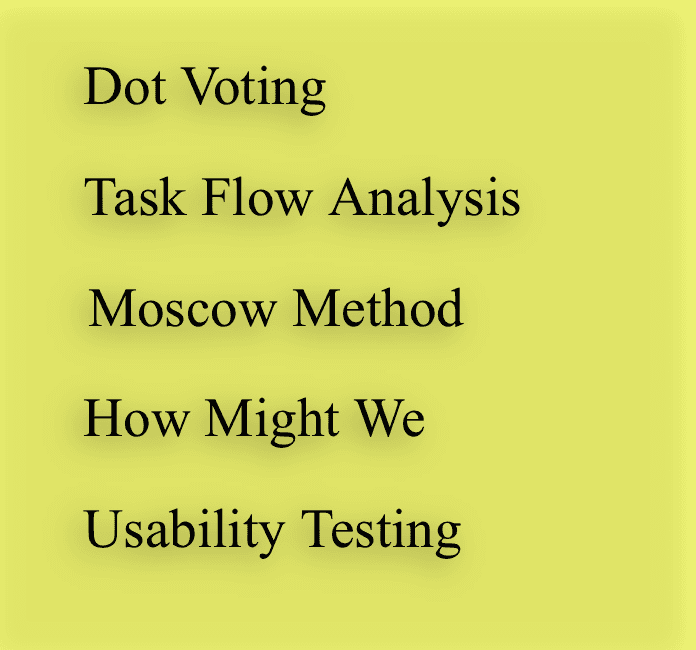
Feature Prioritization


4. Prototyping
Lo-Fi


Final Result
Visual System
In 2010, Japanese railways installed blue lights on platforms. Suicides dropped 84%. Meanwhile, Sweden prescribes aurora viewing for mental health. Studies show those soft blue-green gradients measurably lower stress. Recognizing that users may access sensitive records during moments of crisis or diminished capacity, we applied this color psychology to help regulate user stress.
Familiar UI
Recognising users may be widely aged 18-60+, we chose conventional UI and UX patterns to rely on familiar mental models, lowering cognitive friction and the learning curve to make sure the UI is accessible for all age groups.
Sensitive Tone
Since the data is deeply personal, the copy is crafted to feel safe and human. We maintained a warm and supportive tone keeping mental health in mind, ensuring every button, error message, and notification protects user well-being.

The Problem
Wellbeing Check-in
Displaying raw clinical records without preemptive warnings compromised psychological safety and caused unexpected emotional distress.
Reasoning
Research revealed that patients require the same pacing and flexibility in digital environments as they receive in physical clinical settings, driving our shift toward a trauma-informed UX strategy.
Design Decision
Introducing intentional friction via a pre-viewing well-being check restores user agency, allowing patients to assess their emotional readiness and safely opt out if needed.

The Problem
Request Status Tracker
Silence breeds anxiety. Without a clear feedback loop, users felt left in the dark during critical waiting periods.
Reasoning
An invisible wait time amplifies the stress of a complex legal system. Exposing the internal steps replaces this uncertainty with reassurance.
Design Decision
Designing for transparency. We implemented real-time progress visualization paired with definitive delivery dates. Demystifying the wait time not only anchors the user's trust but actively cuts down on inbound support inquiries.

The Problem
Guided Request Flow
Legal jargon creates friction. Dense GDPR and FOI terminology leaves patients unsure of which path to take.
Reasoning
Replacing bureaucratic terminology with plain-language explanations at the point of decision removes the cognitive burden, balancing usability with psychological safety.
Design Decision
A guided intake form clarifying jargon at the point of decision. Pairing legal frameworks (GDPR/FOI) with plain-language helper text translates bureaucratic complexity into a single, approachable step.

The Problem
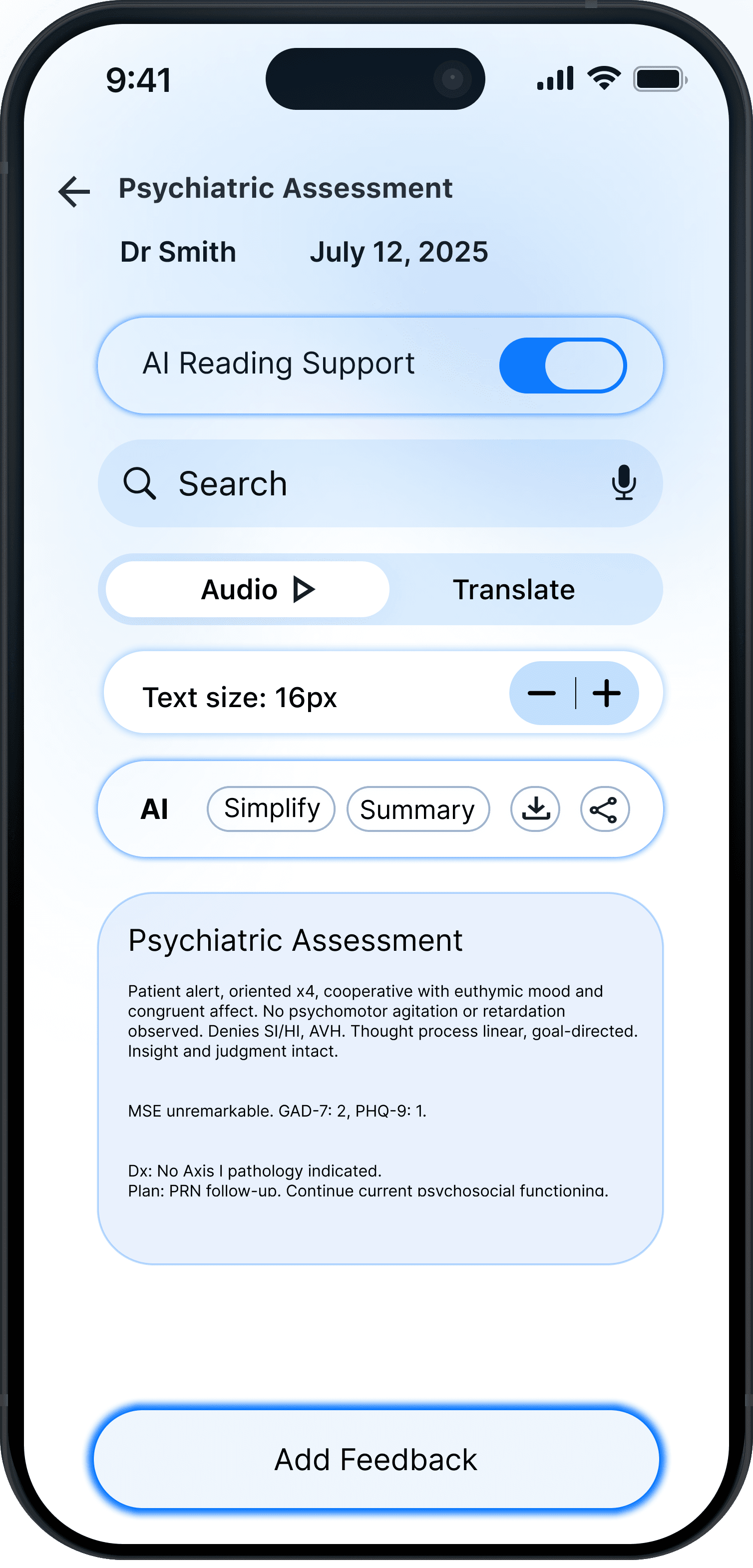
AI Interpretation (Opt- in)
Dense clinical terminology can feel alienating, locking patients out of their own health narratives and triggering emotional distress.
Reasoning
While AI effectively translates dense medical jargon into accessible language, forcing automation on vulnerable users damages trust. Allowing patients to control when and how they use interpretation tools ensures they gain clarity without sacrificing agency.
Design Decision
Optional AI tools for summaries, translations, and text-to-speech, paired with clear disclaimers. Because mandatory AI erodes trust, these features remain strictly opt-in to guarantee transparency and empower user choice.
The Problem
Privacy & Audit Log
A lack of transparency leaves patients unable to track who is accessing their sensitive mental health data.
Reasoning
Patients cannot feel psychologically safe if they cannot track their own data. Shifting from a closed system to one of complete visibility replaces the anxiety of the unknown with actionable oversight.
Design Decision
A comprehensive audit log and granular sharing controls. Because privacy concerns dominated the thematic analysis, total transparency is required to resolve user anxiety over unauthorized viewing.
Design Decision
For the full PDF and original screens, kindly email me at @nikhilafonso9@gmail.com

Testing & Iteration
What We Learned from Users
Eight people tested the prototype across three rounds. Their feedback was used to continuously tweak the design so it felt intuitive and safe.
01
Implemented "Safe Stopping Points": Added the ability for users to save their progress and exit safely, allowing them to return to the records later without losing their place.
02
Calibrated AI Interpretation: Reduced the verbosity of the AI tool. Testing revealed that users preferred brief, plain-language clarifications over comprehensive text rewrites.
03
Therapist Integration: Introduced an option for users to securely share specific sections of their clinical records directly with a therapist from within the app.
Outcome
"This is what patient-centered actually means. Not just designing for patients, but designing with their emotional reality in mind." —Lia Foley-Kelleher, Project Partner
01
87.5% Task Success: Across eight usability sessions, all participants successfully navigated and completed the complex request flow entirely unassisted.
02
Clinical Endorsement: The system architecture underwent a thorough expert review by three mental health professionals.
03
Accessibility: The final interface is WCAG 2.1 AA compliance.
Future Learnings
Due to privacy constraints around a vulnerable user base, we couldn't track standard metrics. Moving forward, the goal is to navigate the legal requirements so we can safely test with real users.
01
Managing Clinical Edge Cases: Future iterations must include secure bypass mechanisms for emergencies where immediate record access is medically critical.
02
Mitigating AI Risk: Next steps require collaborating with clinical experts to set strict guardrails, ensuring the AI clarifies terminology without misrepresenting diagnoses.
03
The Provider Experience: Future research must evaluate how this system impacts clinicians, ensuring the new structure does not increase their administrative burden.
Case Studies